

 NPS
NPS


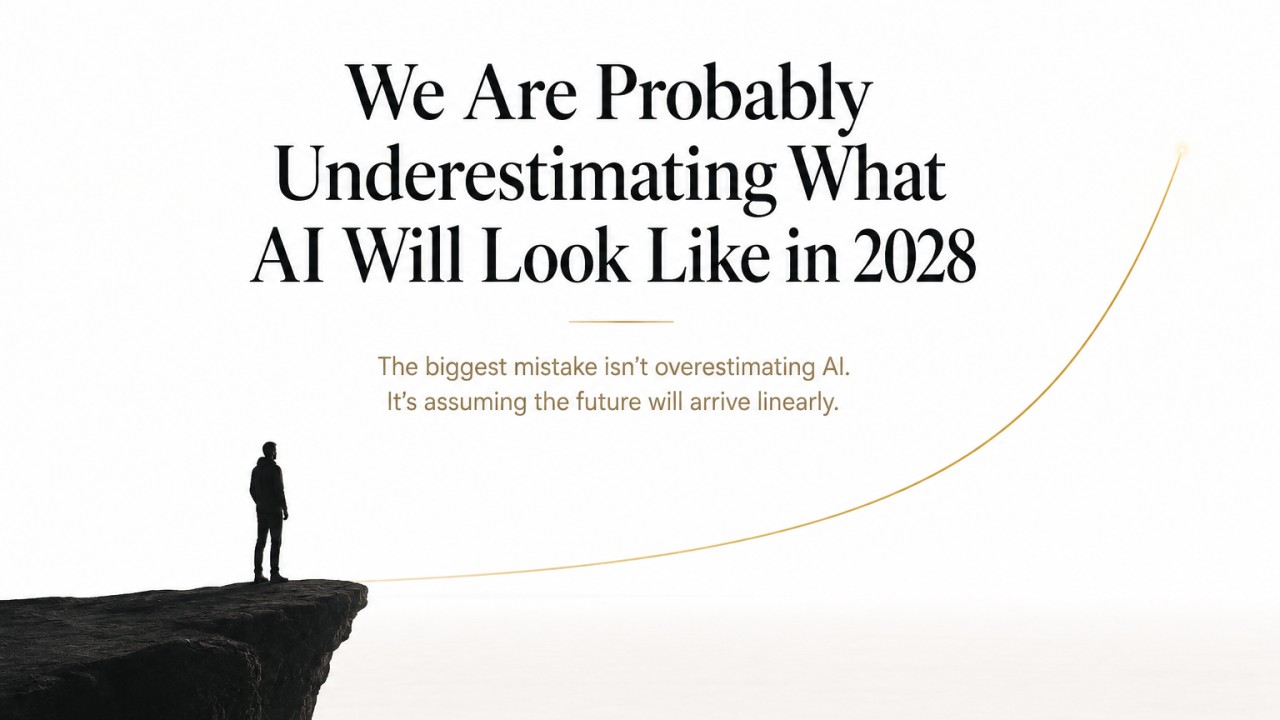
And the reason has less to do with AI than with how humans imagine the future.
Try a small thought experiment.
Go back exactly two years.
June 2024.
ChatGPT was impressive. Claude was impressive. Gemini was improving quickly.
But for most people, AI was still something you talked to.
You typed a prompt.
It generated an answer.
Maybe it summarized a document. Wrote an email. Generated some code. Created an image.
There was enormous excitement around AI.
There was also an enormous amount of skepticism.
Now imagine that in June 2024 someone had described July 2026.
They tell you that frontier AI systems will reason through difficult scientific and mathematical problems, write substantial amounts of production-quality code, search the web, analyze documents, understand images, generate video, operate software, execute commands, use tools and increasingly complete multi-step workflows.
They tell you we will stop talking only about models and increasingly start talking about agents.
They tell you the conversation will shift from:
“What can AI answer?”
to:
“What can AI actually do?”
How much of that would you have believed?
More importantly:
How much would you have underestimated?
Because that is the question that matters now.
Not:
What can AI do today?
But:
What mistake are we making today about what AI will be able to do two years from now?
Humans Have a Linear Imagination
This may be our biggest problem in thinking about AI.
When something improves quickly, we instinctively imagine the next version as a better version of the current thing.
A faster car.
A better phone.
A smarter chatbot.
So when we imagine AI in 2028, most of us subconsciously imagine:
AI today + 30%.
Better reasoning.
Fewer hallucinations.
Better voice.
Better video.
Better coding.
But technological progress rarely respects our psychological comfort.
The 2026 Stanford AI Index reports that some benchmarks designed to challenge AI for years are being saturated within months. On Humanity’s Last Exam, frontier-model performance jumped roughly 30 percentage points in one year. On OSWorld, a benchmark for operating computers, agent performance climbed from roughly 12% to 66.3%.
There is an even stranger measurement.
Researchers at METR have been tracking the complexity of software tasks AI agents can complete, expressed in terms of how long those tasks would take human experts.
Their historical data has shown approximately exponential improvement, with the 50%-reliability task horizon roughly doubling every seven months. METR is very careful to warn that this does not literally mean an AI can independently work for that amount of clock time, nor does the trend guarantee future progress. But through 2025, their newer measurements remained broadly consistent with the historical trend.
Think about what that means.
Twenty-four months isn’t one AI generation.
At that historical rate, it is roughly three to four doublings of task complexity.
Not 30% better.
Potentially an entirely different category of usefulness.
So Let Me Make a Leap of Faith.
Today we mostly give AI tasks.
By 2028, we may increasingly give AI objectives.
There is a profound difference.
Today:
Analyze these 4,000 customer accounts and identify cross-sell opportunities.
Tomorrow:
Increase cross-sell revenue by 15% while maintaining retention above 92%.
And then something strange happens.
The AI determines what needs to happen next.
It analyzes the book.
Segments customers.
Finds opportunities.
Prioritizes them.
Decides which communication channel is appropriate.
Drafts outreach.
Executes permitted actions.
Monitors responses.
Schedules meetings.
Updates systems.
Escalates exceptions.
Measures results.
And changes its strategy.
The human doesn’t disappear.
But the human’s role moves upward.
From doing the work
to supervising the work
to defining the outcome.
We can already see the primitive architecture emerging. Modern agent platforms can give models computers, files, APIs, network access, reusable skills and execution environments so that a single instruction can expand into an end-to-end workflow.
Today this remains imperfect.
That’s precisely the point.
We are looking at the primitive version and imagining the mature version will look roughly the same.
History suggests that is dangerous.
What If “Employee Count” Becomes a Meaningless Metric?
Here is where I become deliberately uncomfortable.
For more than a century, one of the easiest ways to understand the size of a company has been:
How many people work there?
10 employees.
100 employees.
10,000 employees.
Human headcount has been a rough proxy for organizational capacity.
What happens if those two things separate?
Imagine an insurance agency in 2028.
It has 30 humans.
But alongside them operate:
20 renewal agents.
15 cross-sell agents.
10 claims-follow-up agents.
30 prospecting agents.
5 compliance agents.
10 marketing agents.
20 data-quality agents.
5 producer-coaching agents.
Hundreds of specialized pieces of intelligence working continuously across the organization.
Calling these things “employees” may be wrong.
Calling them “software” may also become inadequate.
Perhaps companies begin thinking in terms of something else entirely:
cognitive capacity.
How much intelligence can your organization deploy against a problem?
That could become as elastic as computing became with the cloud.
Need massive research capacity for six hours?
Deploy it.
Need every account in a million-record database reviewed tonight?
Deploy it.
Need an agent watching one critical process for six months?
Deploy it.
We spent the last twenty years making computing elastic.
We may spend the next twenty making intelligence elastic.
Now Let’s Go Further.
There are possibilities I currently consider relatively low probability by 2028.
But I’ve become less comfortable dismissing low-probability AI outcomes simply because they sound strange today.
Edge Case #1: The One-Person Billion-Dollar Company
Could one person build and operate a billion-dollar company with AI?
By 2028?
My instinct says: unlikely.
But consider what actually requires people inside a company.
Engineering.
Research.
Design.
Marketing.
Customer support.
Sales development.
Finance.
Analytics.
Operations.
Legal drafting.
Project management.
Management itself.
If increasingly capable agents can perform meaningful portions of each function, the relationship between enterprise value and employee count starts breaking.
I don’t predict that the first one-person billion-dollar company definitely arrives by 2028.
I am saying something more uncomfortable:
I am no longer confident enough to laugh at the possibility.
Edge Case #2: The First Company Managed Primarily by AI
Not owned by AI.
Not legally controlled by AI.
Managed operationally by AI.
Humans set capital allocation, values, boundaries and ultimate accountability.
But an AI system determines:
what gets prioritized,
which projects continue,
where resources move,
which customers need intervention,
which experiments get launched,
and which operational problems deserve attention.
Essentially:
humans become the board; AI becomes part of management.
Sounds extreme.
Probably is.
But remember what “AI agent” meant just two years ago.
Edge Case #3: AI Starts Improving AI Faster Than Humans Do
This one matters far beyond business.
Today humans build the models.
But AI already writes code, assists researchers, analyzes experiments and contributes to scientific work.
Stanford reports rapid growth in AI’s role in science, while also showing an important limitation: frontier systems can outperform human chemists on some evaluations yet still struggle to reproduce published research reliably.
So we’re not there.
But imagine AI becomes sufficiently capable to materially accelerate:
AI research,
model architecture,
training optimization,
evaluation,
chip design,
and AI software engineering.
Then something changes.
AI progress is no longer driven only by human researchers building better AI.
It is partially driven by better AI helping humans build better AI.
That’s a feedback loop.
And forecasting systems inside a feedback loop becomes considerably harder.
There Is, Of Course, Another Possibility.
We may be overestimating everything.
Scaling could slow.
Compute constraints could bite.
Energy could become limiting.
Regulation could restrict deployment.
Reliability may prove far harder than intelligence.
Economics might not work.
Customers may resist autonomous systems.
And AI’s strange unevenness may persist.
Today’s systems demonstrate this beautifully.
A model can perform extraordinarily difficult mathematical reasoning and then fail something embarrassingly simple.
Stanford calls this jagged intelligence.
That should make anyone making confident predictions humble.
Including me.
But here’s the asymmetry I can’t stop thinking about:
What if the bigger strategic risk isn’t overestimating AI?
What if it is underestimating it?
Because We Have Seen This Movie Before.
We tend to imagine new technologies through the old world.
The internet looked like digital newspapers.
Smartphones looked like phones with email.
Cloud looked like rented servers.
Social media looked like personal webpages.
AI currently looks like software that talks to us.
Maybe that’s because we’re still looking at the new world through the vocabulary of the old one.
The smartphone wasn’t ultimately about making phone calls better.
The internet wasn’t ultimately about making mail electronic.
And perhaps AI isn’t ultimately about making knowledge workers more productive.
Maybe that’s just Version 1.
Perhaps the Real AI Revolution Isn’t Productivity.
Every corporate AI presentation today seems to contain some version of:
“AI will make employees 20–30% more productive.”
Maybe.
But that might eventually sound like someone in 1995 predicting:
“The internet will reduce postage costs.”
Technically correct.
Completely missing the point.
The much bigger possibility is this:
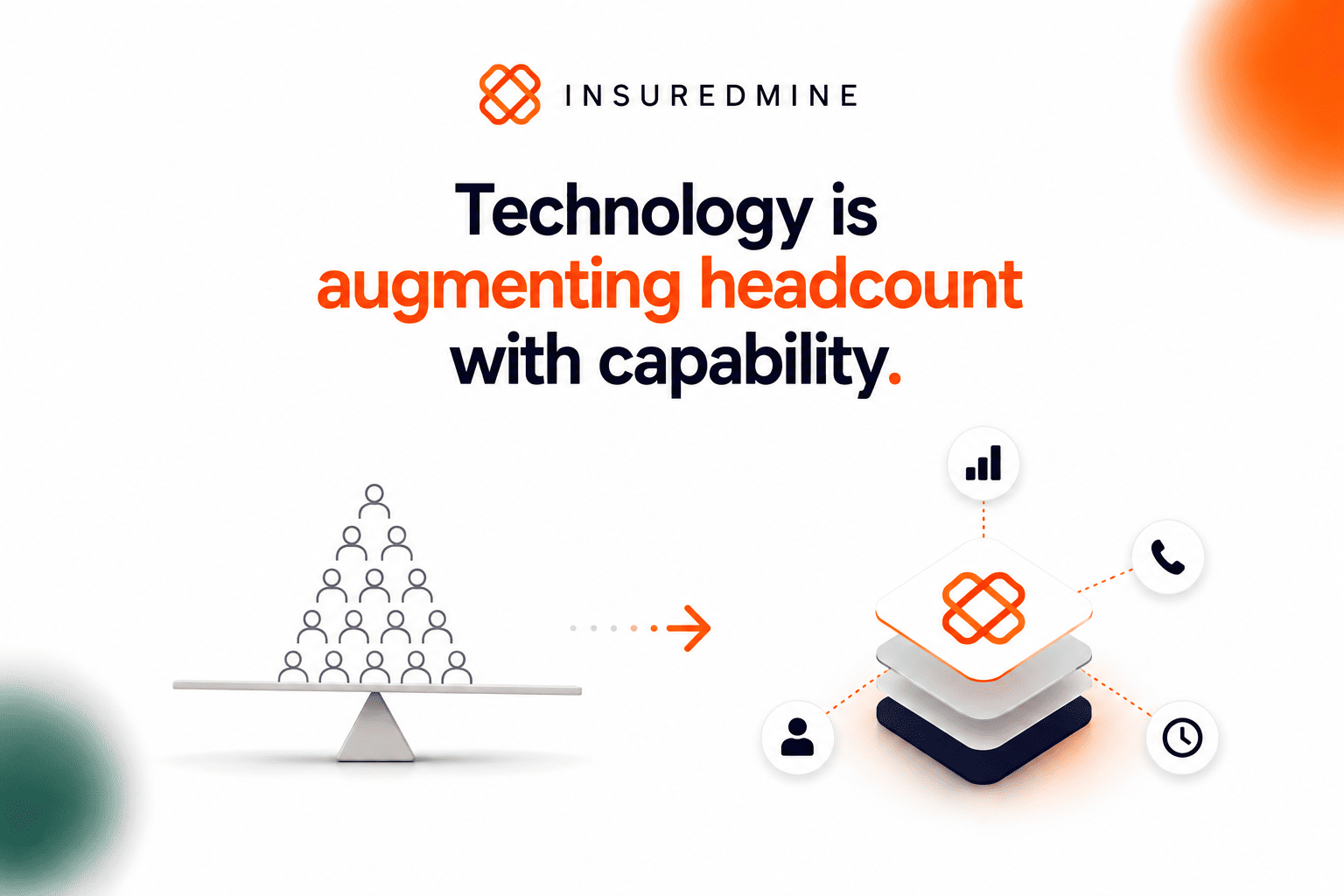
AI separates the amount of intelligence an organization can deploy from the number of humans it employs.
If that happens, the fundamental unit of organizational capacity changes.
For centuries:
More work required more people.
Then machines separated physical output from human muscle.
Computers separated calculation from human arithmetic.
The internet separated distribution from physical geography.
AI may separate cognitive output from human headcount.
That is a much bigger idea than productivity.
Which Brings Me Back to 2028.
I don’t know what AI will look like two years from now.
Nobody does.
A large 2024 survey of 2,778 published AI researchers illustrates just how wide the uncertainty is. Their aggregate forecasts gave at least a 50% probability to several substantial autonomous capabilities by 2028, while the median timeline for machines outperforming humans at every possible task remained much farther away.
So this isn’t an argument for inevitable AGI.
It is an argument against comfortable extrapolation.
In June 2024, July 2026 looked farther away than it actually was.
Today, July 2028 feels far away again.
It isn’t.
It is 24 months.
And if AI continues improving anywhere near its recent pace, asking:
“How much better will ChatGPT be?”
may be entirely the wrong question.
The better questions might be:
What happens when AI doesn’t wait for a prompt?
What happens when AI owns a workflow instead of assisting with a task?
What happens when a company can deploy intelligence almost as easily as it deploys computing?
What happens to management when agents can manage other agents?
And perhaps the most uncomfortable one:
If you underestimated July 2026 while standing in June 2024, what makes you so confident you’re not underestimating July 2028 today?
I don’t have the answer.
But I’m increasingly convinced that the dangerous assumption isn’t believing AI will move too fast.
It’s building your company on the assumption that it won’t.